Forgotten on the Floor: How America's Nursing Homes Are Failing to Protect Their Most Vulnerable Residents
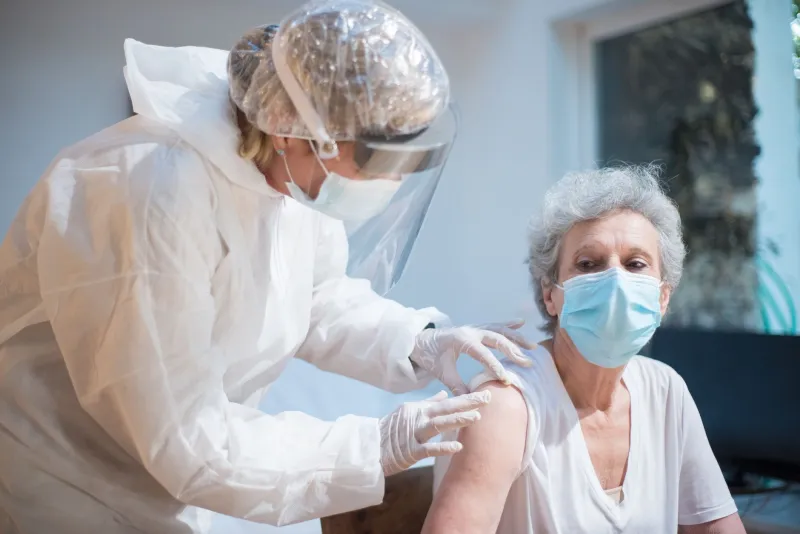
For most Americans, vaccination is a matter of scheduling a visit to a pharmacy or physician's office. For the roughly 1.4 million people living in the nation's skilled nursing facilities, however, that process is far more complicated — and far less reliable. Despite federal mandates, state oversight mechanisms, and decades of clinical evidence supporting immunization in older adults, vaccination rates inside long-term care facilities remain stubbornly, and dangerously, inconsistent.
The consequences are not abstract. Residents of nursing homes and assisted living communities face elevated risks from influenza, pneumococcal disease, shingles, COVID-19, and respiratory syncytial virus (RSV). Their immune systems, already compromised by age and chronic illness, offer diminished natural defenses. Vaccination is not merely beneficial for this population — it is, in many cases, the difference between a manageable illness and a fatal one.
Yet the system designed to protect them is riddled with gaps.
A Patchwork of Oversight
Federal regulations administered through the Centers for Medicare & Medicaid Services (CMS) require that nursing homes offer influenza and pneumococcal vaccines to all residents and document any refusals. These requirements, codified under 42 CFR §483.80, represent a baseline standard. But experts in geriatric medicine have long argued that a baseline is not the same as adequate protection.
For one thing, CMS requirements do not extend comprehensively to all recommended adult vaccines. While COVID-19 vaccination mandates for facility staff were introduced during the pandemic, resident vaccination beyond influenza and pneumococcal coverage is largely left to individual facility protocols — protocols that vary enormously from one institution to the next.
State health departments add another layer of complexity. Some states impose stricter documentation requirements or conduct more frequent inspections; others rely heavily on self-reported data from facilities themselves. The result is a regulatory environment where a resident in Minnesota may receive a meaningfully different standard of immunization care than one in Mississippi.
Staffing Shortages and the Vaccination Bottleneck
Even where regulatory frameworks are sound, implementation depends on people — and long-term care facilities across the country are facing a severe and sustained workforce crisis. According to the American Health Care Association, the nursing home sector has lost tens of thousands of jobs since 2020, with many facilities operating below safe staffing thresholds.
When nurses and certified nursing assistants are stretched thin, preventive care is often the first casualty. Vaccine administration requires documentation, consent verification, observation for adverse reactions, and follow-up — tasks that consume meaningful time in already overburdened settings. In facilities where a single nurse may be responsible for 30 or more residents during a given shift, the logistical demands of a vaccination drive can feel insurmountable.
"The intention is often there," notes one geriatrician practicing in the Mid-Atlantic region who consults for multiple long-term care facilities. "But intention without infrastructure doesn't protect anyone. If you don't have dedicated staff time and a tracking system that works, vaccines fall through the cracks."
The Medical Records Problem
Compounding these operational challenges is the persistent fragmentation of medical records in the long-term care sector. Many nursing home residents have lived with multiple chronic conditions, seen numerous specialists, and transitioned through hospitals, rehabilitation centers, and home health settings before arriving at a facility. Their vaccination histories are often scattered across incompatible electronic health record systems — or, in some cases, exist only on paper documents that were never transferred.
Without a complete vaccination history, facilities face a choice: assume a resident is up to date and risk under-vaccination, or administer vaccines that may have already been received. Neither option is ideal. While repeat vaccination is generally safe, it represents a resource expenditure that strains already limited budgets. More troubling is the alternative — allowing potentially unprotected residents to remain so because the documentation burden seems too great to resolve.
The CDC's Immunization Information Systems (IIS), sometimes called vaccine registries, were designed in part to address this problem. However, participation among long-term care facilities remains inconsistent, and registry interoperability across state lines is still an evolving challenge for the broader health system.
Which Vaccines Are Most Commonly Missed?
Influenza vaccination rates in nursing homes, while imperfect, tend to be the highest among recommended vaccines, partly because of the CMS mandate and partly because of the well-established annual flu shot culture in the United States. Pneumococcal coverage, similarly, has improved over time.
But other vaccines with strong evidence bases in older adult populations are frequently overlooked:
-
Recombinant Zoster Vaccine (Shingrix): Recommended in two doses for adults 50 and older, Shingrix offers robust protection against shingles and its painful complication, postherpetic neuralgia. Yet the two-dose series — administered two to six months apart — requires coordination that many facilities struggle to maintain. Residents who receive the first dose are sometimes discharged, transferred, or lost to follow-up before completing the series.
-
RSV Vaccine: Approved in 2023 for adults 60 and older, RSV vaccination is still making its way into standard nursing home protocols. Awareness among facility staff remains uneven, and formal guidance from CMS has yet to be fully integrated into inspection criteria.
-
Updated COVID-19 Boosters: Despite the high mortality burden COVID-19 has placed on nursing home populations, booster uptake among residents has declined sharply since the peak of the pandemic. Vaccine fatigue, changing public messaging, and reduced federal funding for long-term care vaccination programs have all contributed to this trend.
What Families Can Do Right Now
For families with a loved one in a long-term care setting, navigating this landscape requires proactive engagement. The following steps can help ensure that a relative receives the full benefit of available immunization:
Request a written vaccination record. Facilities are required to maintain immunization documentation. Ask for a printed or electronic copy and compare it against the CDC's recommended adult immunization schedule, available at cdc.gov/vaccines.
Ask specifically about non-mandated vaccines. Inquire whether your relative has been offered Shingrix, the updated COVID-19 booster, and the RSV vaccine. If not, ask the facility's medical director or attending physician to review eligibility.
Designate a healthcare proxy who monitors preventive care. Many families focus, understandably, on acute medical needs during a loved one's nursing home stay. Designating a family member or trusted advocate to track preventive care — including vaccinations — ensures this aspect of health is not overlooked.
Contact your state health department if concerns persist. Each state has a Long-Term Care Ombudsman program, federally mandated under the Older Americans Act, which investigates complaints and advocates for residents' rights. Vaccination concerns fall within their purview.
A System That Must Do Better
The failures documented here are not the result of malice or indifference on the part of individual caregivers. They are, in large measure, the predictable outcome of an underfunded, understaffed, and inconsistently regulated system that has long been asked to do more than its resources allow.
But the stakes are too high — and the solutions too available — to accept the status quo. Federal policymakers, state health officials, facility administrators, and families all have roles to play in closing the vaccination gap in America's nursing homes. The residents living behind those doors are not abstractions. They are parents, grandparents, and lifelong members of communities across this country. They deserve the full protection that modern immunization science can offer.
Immuize will continue to track policy developments, facility-level data, and emerging vaccine recommendations relevant to older adults. Families seeking additional guidance can explore our Adult Immunization and Vaccine Schedules & Planning sections for up-to-date information on what vaccines are recommended, when, and for whom.